Zapier vs Make: Which Automation Tool Is Better in 2026?
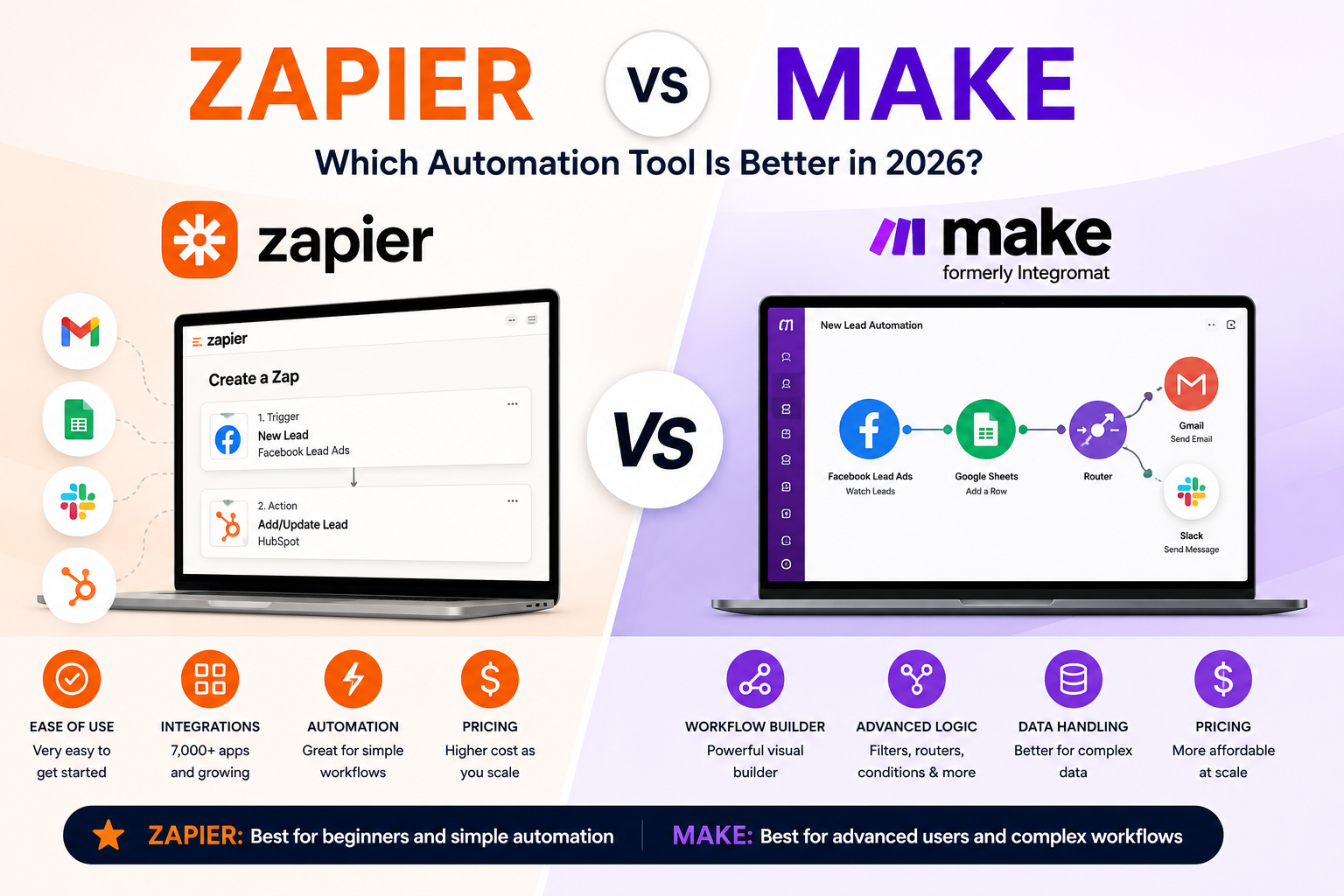
Zapier vs Make
If you’ve ever found yourself copying data from one app to another, manually sending emails, or updating spreadsheets for hours every week, you’ve probably thought about automation.
That’s where tools like Zapier and Make come in.
Both platforms help you connect your favorite apps and automate repetitive tasks without writing code. But after using both tools, one thing becomes clear: they’re designed for slightly different types of users.
So which one should you choose in 2026?
Let’s break it down.
What Is Zapier?
Zapier is probably the first automation platform most people hear about.
It’s simple, beginner-friendly, and supports thousands of popular apps. You can create automations—called “Zaps”—that trigger actions between apps automatically.
For example:
- Save Gmail attachments to Google Drive
- Send Slack notifications when a form is submitted
- Add Facebook leads directly to your CRM
- Create Trello tasks from emails
The biggest advantage of Zapier is how easy it is to get started. Even if you’ve never built an automation before, you can usually create your first workflow in minutes.
What Is Make?
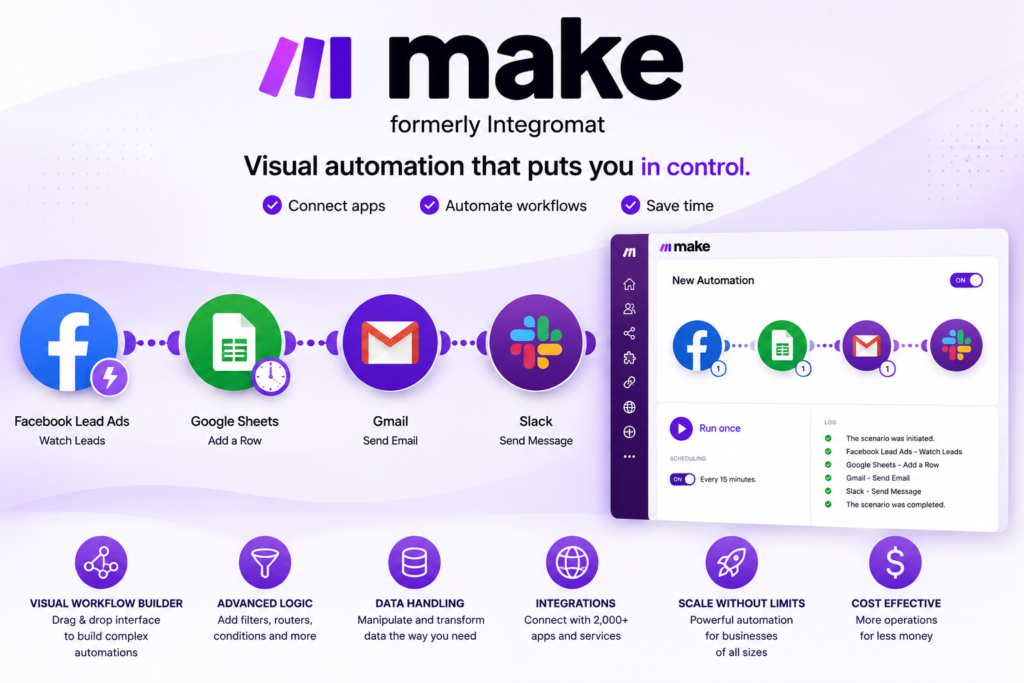
Make (formerly known as Integromat) takes a different approach.
Instead of using a simple step-by-step workflow builder, Make provides a visual canvas where you can design complex automation systems.
At first glance, it looks more complicated than Zapier. But once you understand how it works, you’ll realize how much control it gives you.
With Make, you can:
- Build multi-step workflows
- Filter data between actions
- Route information in different directions
- Process large amounts of data
- Create advanced business automations
That’s why many marketers, agencies, and automation specialists prefer Make.
Ease of Use: Which Is Simpler?
If you’re completely new to automation, Zapier wins this category without question.
The interface is clean and straightforward. You simply choose a trigger, add an action, test it, and you’re done.
Make isn’t difficult, but there is definitely a learning curve. The visual workflow builder gives you more flexibility, but it also requires a little more time to understand.
Winner: Zapier
Workflow Flexibility
This is where Make starts to pull ahead.
Zapier works best for simple automations:
Trigger → Action → Action
But real-world business processes are rarely that simple.
Sometimes you need conditions, filters, branching paths, or multiple outcomes based on different situations.
Make handles these scenarios beautifully.
Its visual workflow builder makes it easy to see exactly what’s happening inside your automation.
For advanced workflows, Make is simply more powerful.
Winner: Make
Integrations
One of Zapier’s biggest strengths is its massive integration library.
It connects with thousands of popular tools, including:
- Gmail
- Slack
- HubSpot
- Shopify
- Notion
- Salesforce
- Google Sheets
If you’re using mainstream business software, there’s a good chance Zapier supports it.
Make also supports many popular apps, but Zapier still has an advantage when it comes to the number of available integrations.
Winner: Zapier
Pricing
For many users, pricing is the deciding factor.
Zapier is a fantastic platform, but costs can increase quickly as your automation needs grow.
Make is often much more affordable for similar workflow volumes.
This is one reason many freelancers, agencies, and small business owners switch to Make after initially starting with Zapier.
If budget matters, Make usually offers better value for money.
Winner: Make
Which Platform Is Better for Businesses?
The answer depends on what kind of business you’re running.
Choose Zapier if:
- You’re new to automation
- You want something easy to learn
- Your workflows are relatively simple
- You value convenience over customization
Choose Make if:
- You need advanced workflows
- You want to reduce automation costs
- You manage large amounts of data
- You need maximum flexibility
ChatGPT vs Claude: Which AI Assistant Is Better in 2026?
My Experience
For beginners, I usually recommend starting with Zapier.
The learning curve is minimal, and you can see results very quickly.
However, once your business starts growing and your workflows become more complicated, Make becomes much more attractive.
Its visual builder, flexibility, and lower cost make it one of the most powerful automation platforms available today.
Final Verdict
Both Zapier and Make are excellent automation tools, and neither is a bad choice.
If your goal is simplicity and quick setup, Zapier is still one of the best platforms on the market.
But if you’re looking for advanced automation, greater flexibility, and better long-term value, Make is the stronger option in 2026.
For most marketers, freelancers, and growing businesses, Make offers more power for less money—which is why it’s my preferred choice today.
Quick Summary
Best for Beginners: Zapier
Best for Advanced Automation: Make
Overall Winner in 2026: Make